Step 3. Clarify Your Aim
Goals & Objectives
“The clearer you are about your goals, the more likely you are to achieve them.” – Brian Tracy
With any project, it is essential to define the desired endpoint, so we know what we are aiming at. The research conducted to this point, tells you where you are, but goals define where you’re going.
I can’t overstate the importance of this step. The clearer you can define the goal, the easier the path forward will present itself.
The opposite of course, is that without a clear destination, any road will take you there (and the destination will end up not being where you really needed to be!)
The key takeaway here is that your goals must be crystal clear – a better website is not a goal and that kind of vague objective will see you pay too much for a website that does not deliver.
Download the Free ALCHEMY Website Planning Guide
Why Goals Matter
Clear, well-ranked goals help:
Keep focus on what really matters
Guide decisions on features and budget
Measure progress and success
Align teams and avoid conflicts
Navigate tough decisions when compromises are needed
Common Website Goals
Website goals often include:
Increasing visibility and traffic
Generating leads, enquiries, or sales
Encouraging sign-ups or downloads
Supporting customers
Gaining insight through analytics
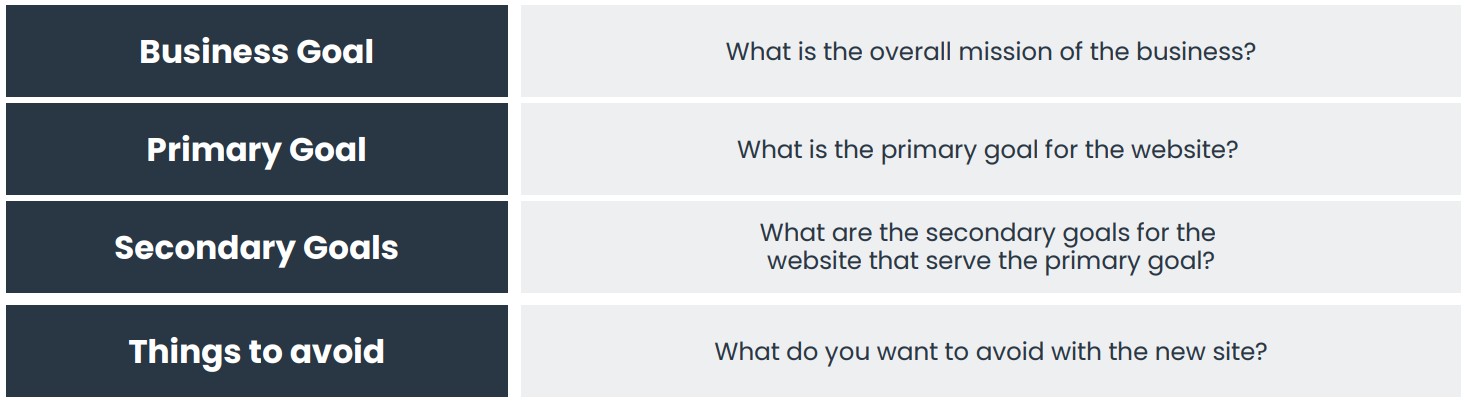
Each website should have a primary goal (the main reason it exists), supported by secondary and tertiary goals. You can also define anti-goals, what you don’t want to do, to avoid wasting time and money on misaligned efforts.
The Hierarchy of Goals
It is important to define the hierarchy of goals so we can ensure lower order goals serve
the higher order goals. Your website goals should serve your overall business goals.
Handling Conflicts Through Goals
Way too many projects slow down or become derailed when there are differences of opinion about how to move forward. Having clearly defined goals can help here as we can always sanity check our decisions or conflicts from the perspective of the goals for
the website.
SMART Goals
Once you’ve listed your goals, you can develop them further using the SMART goals framework, which helps make objectives clear, actionable, and achievable. SMART stands for:
Specific: Clearly define the goal by answering what, why, and how.
Example: “Increase organic traffic to the blog section.”
Measurable: Include criteria to track progress, often using numbers.
Example: “Increase blog traffic by 15%.”
Achievable: Ensure the goal is realistic based on available resources and performance.
Example: “A 15% increase is realistic with current SEO strategies.”
Relevant: Align the goal with broader objectives.
Example: “Blog traffic supports lead generation.”
Time-bound: Set a deadline to maintain focus.
Example: “Achieve this within three months.”
Summary
Using the SMART Goals framework you will challenge your goals and make them stronger, practical and easier to measure.
Key point being, if you can’t make your goals SMART then they are likely not the right goals.
Actions
· Define your goals
· Develop them as SMART Goals
Book a Strategy Call
Give us a call, drop us an email or fill out the form and one of our web design experts will get right back to you.
- 0121 314 2001
- [email protected]
- 112 Zellig, Custard Factory, Birmingham, B9 4AT